A Discussion of Bourgeois Equality Chapter 59 “Trade-Tested Betterment is Democratic in Consumption”
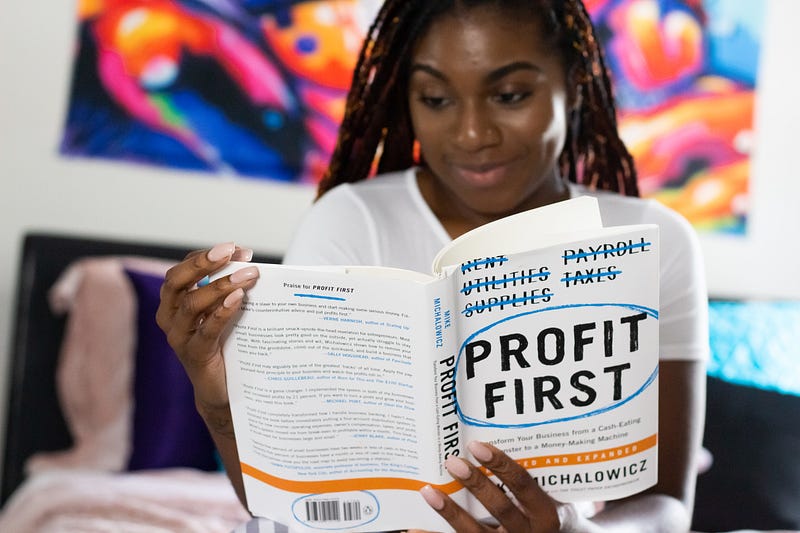
Sadly (to me as an economist) profit is often taken to be a dirty word, when in fact in a competitive market it is the driver to use our resources most efficiently, creating the most using the least.
Dr. McCloskey puts it this way.
…sharply contrary to modern anticommercial opinions among non-economists, the trade test and the profit that announces its fulfillment are democratic and benefit poor people. (p. 561)
Her larger thesis in this book is how freeing the common man to pursue trade-tested betterment led to the explosive growth of the Great Enrichment that has raised the standard of living exponentially for so many in the past couple hundred years.
I find non-economists often bristle at this sentiment that profit seeking leads to better outcomes for the most.
They may think of market power abusing monopolizing firms and industries, which sadly exist too much in our current system. Such firms have escaped the market discipline of competition and in many cases further their power through manipulation of the state. That is an important problem to be solved, but it does not mean we should ignore all the good we have from the competitive system working.
Alternatively, they may think that the profit seeking system seems chaotic, and it would be better if the “smart people” could make decisions how to allocate our resources. This sentiment comes most often from said smart people.
Yet McCloskey refutes this idea with a parallel example.
Art and science and politics advance by the same testing in a marketplace — sometimes in a literal, cash marketplace, sometimes in an analogical marketplace of prestige without money reward…The only alternative to a marketplace of ideas is a socialism of ideas, along Plato’s lines, centrally-planned by wise heads, and at any rate by violent hands able to compel people to adopt the plan: We already know the truth, we Genuine Philosophers, and therefore, we should banish the misleading poets and rhetoricians and democratic politicians. (p. 562)
We will get the best ideas for the most when they compete rather than when a few elite make the choices. This is true in the marketplace of ideas as well as in the marketplace of products.
Our problems do not come from the competitive market place but instead when it is circumvented.
Looking at the outrageous pay gaps between CEOs of large companies and the wage of the average employee in their firm sounds like a condemnation of the profit-seeking I am praising.
In reality, it likely has more to do with the “clubbiness of compensation committees.” (p. 565) There seems to be an aristocratic level of business, politics, and celebrities that operates outside the competitive forces.
And yet, these problems are attributed to the profit seeking system when in fact it is an escape from it.
Some think a planned, socialist economy would be better because you can get rid of the profits and share it with the workers, but profits are not an extra cost to the system, like a tax. And without profits informing people how to direct resources, socialism ends up with worse costs to cover than the profits — inefficiency and waste. (p. 567)
“Democracy is the worst form of government, except for all the others…” is a quote attributed to Winston Churchill. In fact he said something similar to that and was attributing the idea to other unknown people.
Similarly, trade tested betterment is the worst form of economics, except for all the others.
Trade-tested betterment is the most altruistic of economic systems, because everything is directed toward satisfying ordinary customers. (p. 568)
The only way to make profits in a competitive system is by pleasing the customers with the quality and cost of your product. That should be a system to encourage.
The system we should be fighting is the cozy relationship between big businesses and government to set regulations that drive out competition. Government protected profits are the problem, not the profits from the trade-tested system of betterment.
Reference: McCloskey, Deirdre Nansen, 2016. “Trade-Tested Betterment is Democratic in Consumption,” Chapter 59 of Bourgeois Equality, The University of Chicago Press.