
A Discussion of Bourgeois Equality Chapter 58 “Yet Polanyi was Right about Embeddedness”
Last chapter, Dr. McCloskey argued Karl Polanyi was wrong about his central point that capitalism rising in the 1800s was the first time markets had dominant influence on society.
This chapter, she is agreeing with a secondary point he made; markets are embedded. The functioning of the economy cannot be understood without also understanding the institutions, the history, and the social structures that markets are embedded in.
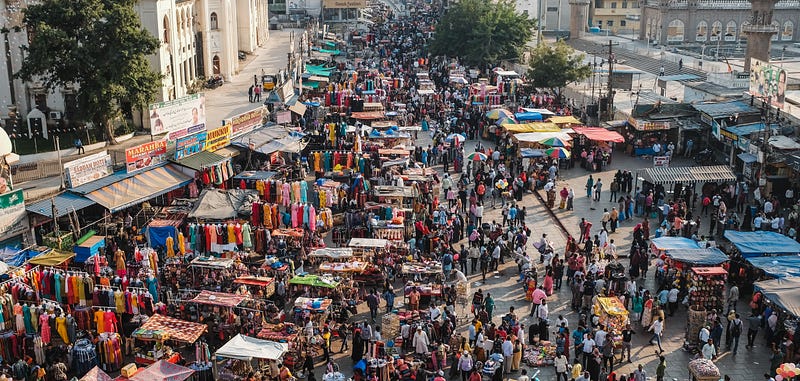
It’s embedding — the barbeque, the Superbowl party, the Kaffeeklatsch in which women tell their story of their tribe, meaningfully. But embedding in social relations happens also in the marketplace. You, being a human, form a relationship with your auto repair man, or your building contractor, or the local Starbucks barista. (p. 555)
In the prudence-only Max U version of economics, you would choose the coffeehouse or mechanic by who has the best price only. With embeddedness, your choice is infused with other considerations like loyalty, trust, and reciprocity.
Ever our consumption choices are not based on prudence alone. You reupholster furniture that is handed down to you and end up spending the around the same money or more than if you had bought new. But you do it because you like that it connects you to family history. (p. 553)
You buy a gas grill so you can host cook outs for friends and neighbors or a big screen TV to have people over for game night. (p. 554)
These are examples of market transactions that are embedded in our society. Our motivation to consume is propelled by our desire to be a part of our community. There is meaning beyond the item purchased.
She cites the work of another economist, Arjo Klamer, whose theories parallel nicely with Polanyi’s embeddedness, but without
…the Polanyan notion that trade is corrosive of all human values, being a merely modern pathology to be cured by using the state’s monopoly of violence to outlaw or heavily regulate property and trade. (p. 557)
Klamer describes various spheres of life we all participate in, and it is these spheres in which the market is embedded.
The marketplace is the agora but it is entangled with the other spheres. There is the private sphere: the oikos or the household. And there is the public sphere: the polis or the government. There is even something he calls The Third Sphere in which the community is interacting and defining the common culture. (p. 555)
While McCloskey notes that in some circles, “it is considered clever to sneer at businesspeople as prudence only stick figures,” really we are closer to reality when we realize we all are embedded into these various spheres and are motivated by the virtues extolled in our community. (p. 557)
In fact, these businesspeople are multidimensional. Aside from their business, they identify also with a religion, a club, a friend and family group, and most likely in some part of the Third Sphere of their town. (p. 557)
McCloskey sums it up.
A bourgeois life, I say yet again, does involve and should involve non-commercial realms, as a fully human life must involved the sacred too. That is what Polanyi got right. But markets play their entangled part, and in a great city the trades and the bourgeoisie running them have always played a part, recently with dramatic results in enriching the poor. That is what Polanyi got wrong. (p. 559)
And if Polanyi’s anti-market, anti-bourgeois views triumph, we will lose the benefits from the markets and all that is entangled with them will suffer.
Reference: McCloskey, Deirdre Nansen, 2016. “Yet P0lanyi was Right about Embeddedness,” Chapter 58 of Bourgeois Equality, The University of Chicago Press.