A Discussion of Bourgeois Equality Chapter 1 “The World is Pretty Rich, But Once was Poor”
In my teaching and research, I keep coming back to the question of why an economy grows, with the hope of that knowledge helping those that don’t.
Dr. Deirdre McCloskey wrote a trilogy of books exploring this issue. While her degrees are in economics, her background spans far beyond and she has had professorships in history, English and communications.
Frustrated with the direction of economics in the 1980s at the University of Chicago, she commenced an interdisciplinary study of the humanities. When I read her writings I can see the depth and breadth of her knowledge.
A common criticism of economics today is it is just concerned about profits and we need to enrich our models to make them more realistic and relevant. People are not one dimensional maximizers only concerned with money
Economic history does not get a lot of attention in our field that is much more interested in mathematical analysis. However, a better understanding from history of how we got where we are may improve our modeling. And then we can do the math!
With that in mind, I am going to walk through Dr. McCloskey’s book chapter by chapter to see what we can learn.
The Facts
This first chapter seems repetitive to me but then I have to remind myself that most of this information is likely unknown to most people.
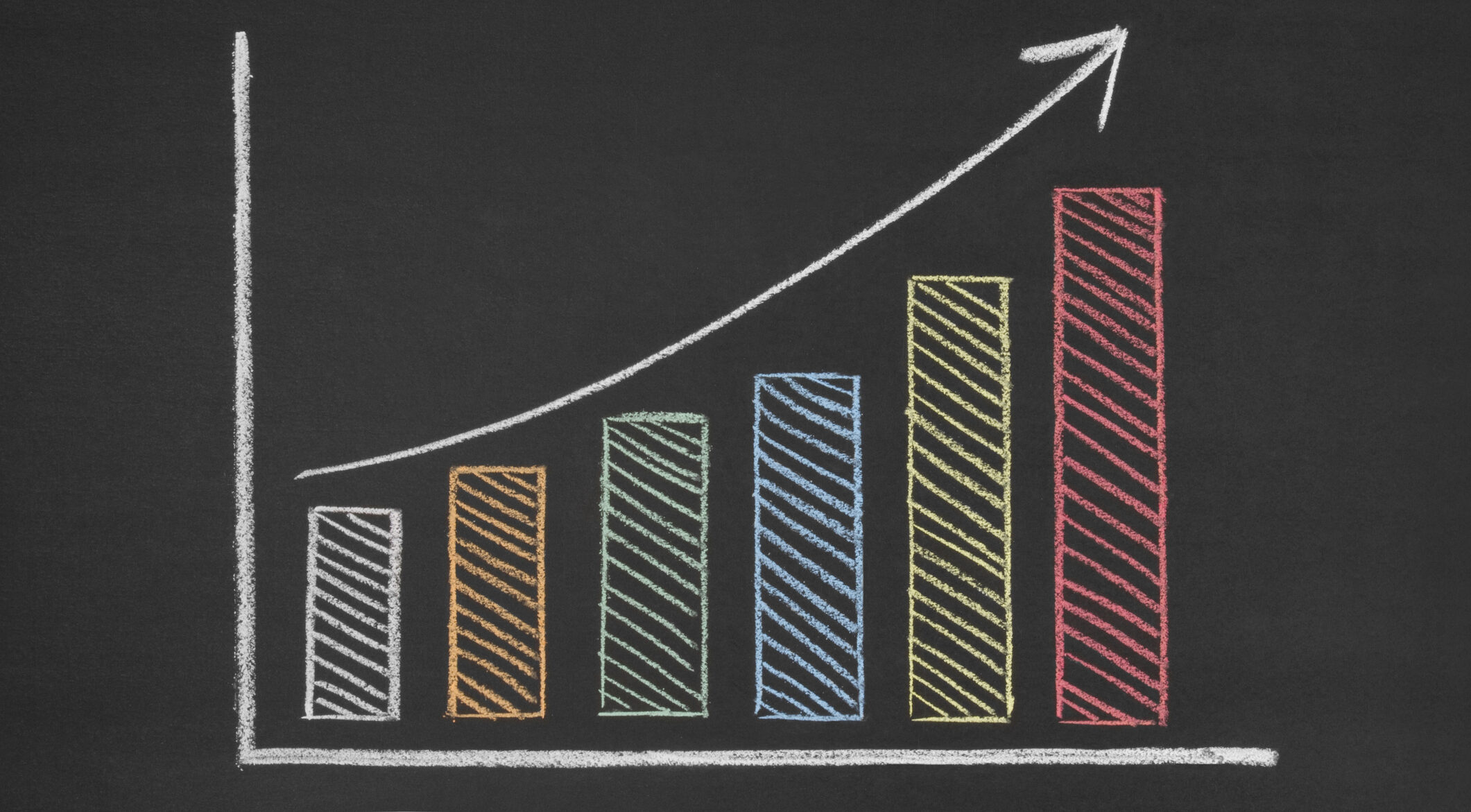
The goal is to understand what she calls “the Great Enrichment,” which is a term that captures the great explosion in material output per person today compared to 1800. (p. 5)
The average person in 1800, and all the thousands of years before that, spent $3 per day. This of course does not mean they literally spent $3 a day but if you added up all they spend and divide by 365 days, it is as if they spent $3 a day. This includes the cost of housing, clothes, food, etc.
There are two things to take from this.
- It is a very small number. The average person in the US spends more than 50 times that, in the neighborhood of $160 per day.
- It did not change. For thousands of years.
Given that, the Great Enrichment is the dramatic rise in average daily expenditures by some countries in the last 200 years.
While the book is going to explore reasons for the Great Enrichment, this chapter is to inform you of its existence.
Now of course there are still people today living on less than $3 a day. The World Bank currently has the absolute poverty level at $1.90 per day with roughly 750 million people below that.
As bad as that is, it is an improvement. Ten years ago though there were a billion people around the world living under the poverty line.
However, what we want to note is that it is not that there are people today at or around the historical average of $3 a day that is unusual.
What is unusual is that billions today are living at levels more than 10 times higher. Not 10% higher, 10 times higher, with the average near $33 a day, the level of spending in Brazil, at the time of the book. (p. 6)
That means we need an explanation that tells us why income has exploded for the average world level by more than 10 times.
And, when you look at the richer countries today like France, Japan or Finland, the increase is 30 times. Again, not 30% but 30 times. (p. 7)
Why it Matters
This has been all about money and material goods, which does matter, of course. Another way to understand it is the increase in our ability to produce.
We humans now produce and consume seventy — 7 x 10 — times more goods and services worldwide than in 1800. (p. 7)
What this means is a much better standard of living. Countries that have enjoyed the Great Enrichment do not worry about running out of food due to famines. They have the essentials covered and have time for education, leisure, and enjoying life.
Periodic famine and starvation used to be common as well as inadequate clothing. McCloskey quotes the Swedish novelist, Vilhelm Moberg, about his childhood in the countryside around 1900.
…he could bring to mind only the long summers. In winter, ‘the children in a smallholder’s cabin…were too badly clothed to stand the cold…Life in winter was quite literally shut in: we dozed by the open fire and slept through many hours of the [very long Scandinavian] night: it was, for children, a quiet vegetating in the darkness under the low cabin.’ (p. 9)
That is why economic growth matters — not just so we can buy more stuff but so people can have a better life.
And that is why it is worth examining the causes of the Great Enrichment so we can replicate it for anyone today who is left “vegetating” in the cold or the heat or just due to a lack of food.
Reference: McCloskey, Deirdre Nansen 2016, “The World is Pretty Rich, but Once Was Poor,” Chapter 1 of Bourgeois Equality, The University of Chicago Press.