A Discussion of Bourgeois Equality Chapter 49 “And then Turned”
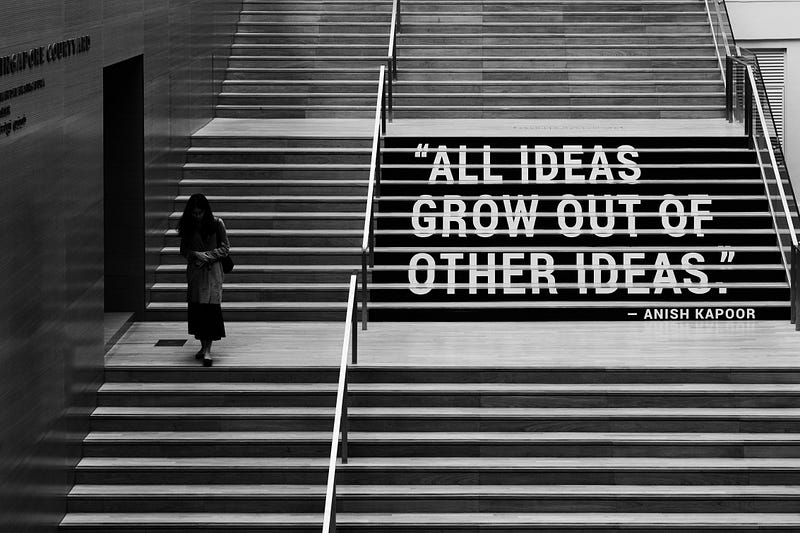
Dr. McCloskey revisits her main thesis: the role of ideas as the source of the Great Enrichment taking off in England in the nineteenth century.
She says it cannot be due to economic, political, or legal changes because any changes in those areas were “narrow.” (p. 470)
As she sums it up, “We must look to ideas, which did change at the right time in the right places, and greatly.” (p. 470)
However, she cautions that new ideas reflected in new rhetoric is delicate and easily undone by other voices.
It was a close call, because good or bad rhetoric from journalists and professors and novelists also matters for how the rulers rule, whether the rulers are the kings or the people. The close call happened after 1700 or so, and it was largely a rhetorical and ethical changed. Material and legal constraints on the economy and society of Europe …did not change much in the run-up to 1800…The laws under which they lived favored the rich, from the game laws to naval impressment. But in the century after 1789 in northwestern Europe, all these changed, and radically. Not before. (p. 470)
She reminds us that markets and trading had existed for millennia, and yet we have this explosion in production only at this time. It is not possible that people had suddenly changed in some biological way at that time to be more disposed to a trade-tested system of betterment. What changed was the attitude towards that system.
The social hostility to the man of business and the rulers’ hostility to hierarchy-disturbing creative destruction was suppressing betterment…The argument is that there was a sharp rise in the society’s receptiveness to improvers. It was social memes, socially inheritable ideas that changed — not individual genetics or psychological dispositions or physical strength or ability to read. (p. 472)
That is, it is not a sudden psychological or biological change that drove the Great Enrichment. It was a sociological change — a change in how society views merchants and entrepreneurs that began to allow the trade-tested system of betterment to take hold.
“Trade-tested system of betterment” has been her preferred term for what most of us would call capitalism.
She starts this chapter by examining the definition of words we might consider synonyms for betterment: innovation and novelty. Apparently, the original definitions of both began with negative connotations before evolving to our present-day use.
Innovations were considered to be disruptive and problematic challenges to the system, whether that be to the state, the church, or the economy. (p. 468)
Novelty also had negative connotations that characterized a novel idea or thing as silly or trivial. (p. 469)
Betterment, however, is a Norman French word first used in the 1300s to refer to “the turning of a thing to profit.” (p. 469)
Hence, her preference for a trade-tested system of betterment. The trade-tested shows decisions are being made in the market between the interactions of buyers and sellers rather than centrally planned. The products and ideas that survive are the best in that they are what consumers want.
She closes out the chapter by quoting Malcolm Gladwell discussing the geniuses of our times like Steve Jobs and Elon Musk. Gladwell says, “what truly distinguishes their histories is not their extraordinary talent but their extraordinary opportunities.” (p. 474)
McCloskey is quoting Gladwell to highlight the point that geniuses, these outliers, exist throughout time without a change in human beings, but they can only develop fully in societies set up to give them opportunities to use their talents in business, arts, and sciences.
If a Watt or a Krupp or an Edison was born in the fifteenth or the thirteenth century, like da Vinci and Bacon, he missed [the opportunities] (p. 475)
For the Great Enrichment to occur requires a lot of factors to come together.
You do need markets and trading, but in addition, you need the idea that people should be free to pursue disruptive new ideas to prevail.
This creates opportunities for the geniuses of that day to develop their new ideas.
And then these new ideas will lead to new products and production methods that will improve as they go through the trade-tested system of betterment.
Reference: McCloskey, Deirdre Nansen, 2016. “And Then Turned,” Chapter 49 of Bourgeois Equality, The University of Chicago Press.